Reading Recap: January 2026
February 2, 2026
Books
On the Calculation of Volume: 1 (OCV I) by Solvej Balle is the diary of Tara Selter’s first year trapped in a time-loop, where she experiences the same November day over and over. In any story where time doesn’t work as expected, the author has some explaining to do. Balle slowly sketches out the rules of the game: how Tara’s presence with the natural world and other people changes or resets as a new November 18th rolls around.
Routines are good but they dull our sensitivities to changes in the world around us. I probably pass a new person every morning, but I can’t say I really notice. I know which buildings are where but would be hard pressed to recall them in detail. My guess is that this is related to the idea of “explore vs. exploit,” where we can choose to either learn about something or take advantage of what we already know. Through this lens, there’s likely a point where I no longer need to learn anything new about my environment to accomplish my goal, i.e. get to work.
But what happens if every day is the same? As she repeatedly experiences November 18th, Tara’s awareness of the world–knowing exactly when a bird will sing or rain will fall–is heightened beyond that of anyone living in a world where time only moves forward. When there’s no reason to exploit, we return to exploration.
On the cover of my American edition is a blurb from Karl Ove Kanausgaard praising OCV I. I’ve only read the first book in his My Struggle series but I’m not surprised he liked it. Both his work and Balle’s novel put every day life under a microscope. The primary effect is seeing the world through the eyes of the writer, but close inspection of the mundane reveals a richness often overlooked.
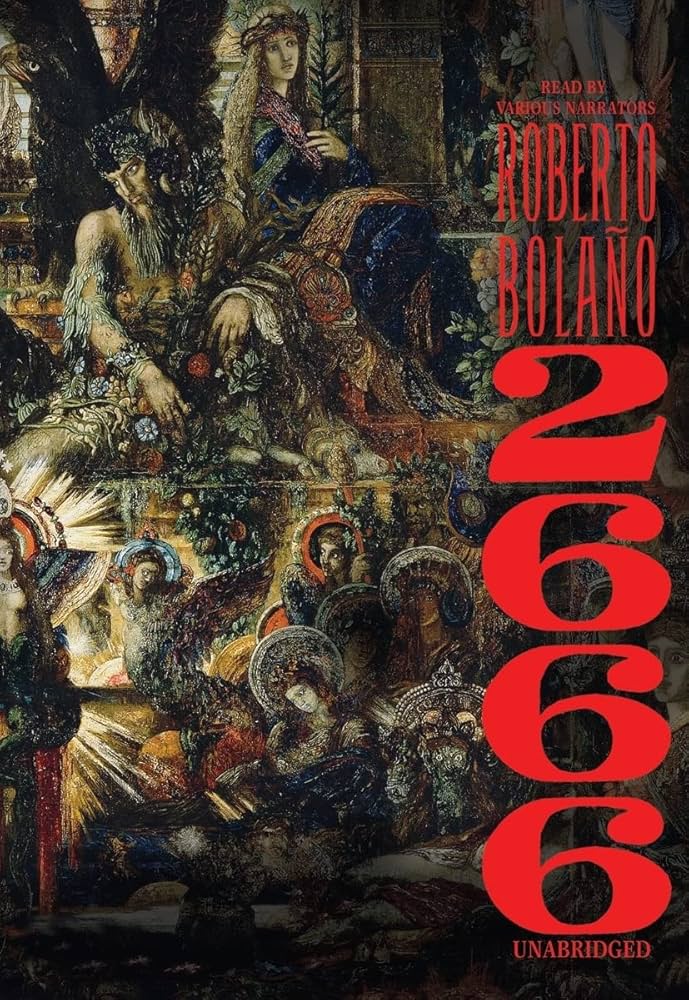
Roberto Bolano’s 2666 is the most ambitious, and often distressing, book I have ever read. The book is composed of five chapters tied together by Santa Teresa, a Mexican border town where hundreds of women are savagely murdered over the course of at least a decade. Although only one chapter deals directly and at length with the women, detectives, journalists, suspects, and politicians living in the eye of the crimes, a violent miasma hangs over the entire novel. Even in the first, mostly peaceful story, which follows four critics on the hunt to find the subject of their scholarship, a seemingly lost writer with an obviously fake pen name (Benno von Archimboldi), there is an aura of menace and dread.
By the fourth chapter, The Part About the Crimes, hints of violence give way to a flood. Bolano details dozens of murders with the detachment of a forensic report. I usually read in the evenings but for this section I started earlier because it was too heavy so close to bed. But after a while, the murders, while no less brutal, bothered me less. I acclimated to the consistent rhythm of the chapter: a section about the detectives, about a seer, murder description, repeat. In hindsight, the intention behind this repititon is obvious, and the effect masterful. That said, I’d be lying if I didn’t feel embarassed, and even ashamed, when I realized my sensitivities to the violence had been numbed. I guess it’s only natural. Still, to react to the 101st victim’s murder with anything less than the 1st feels seems to relegate the former.
But enough about the horror. What I loved about 2666 was the vivid scenes and characters Bolano conjured. Episodes that lasted only a few pages, usually as a tangent but sometimes even more remote: an anecdote from a character within a story told by another character.
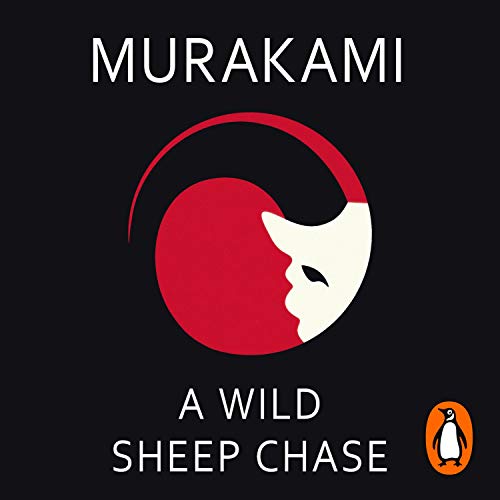
I haven’t read anyone besides Murakami who can really pull off (or so much as try to pull off) a story that’s part hard-boiled and part magical realism. A Wild Sheep Chase follows an unnamed 20-something ad exec into the snowy mountains of Hokkaido in search of a sheep that shouldn’t exist. But the sheep and the search are just vehicles for the dialogue, characters, and atmosphere. Like many hard boiled or noir stories, the plot is the least important (and even incoherent See e.g. The Big Sleep (1946) ) element. The titular sheep is a mere MacGuffin. But against this backdrop Murakami introduces a colorful cast of archetypal characters, known only by their occupation: “The Chauffeur”, “The Secretary”, and the “The Sheep Professor”.
All in all an enjoyable read, but the narrator felt shallower than Murakami’s others. Almost as if he was just another placeholder: “The Hero, " who vanquishes his own ennui and rides off into the mountain sunset.